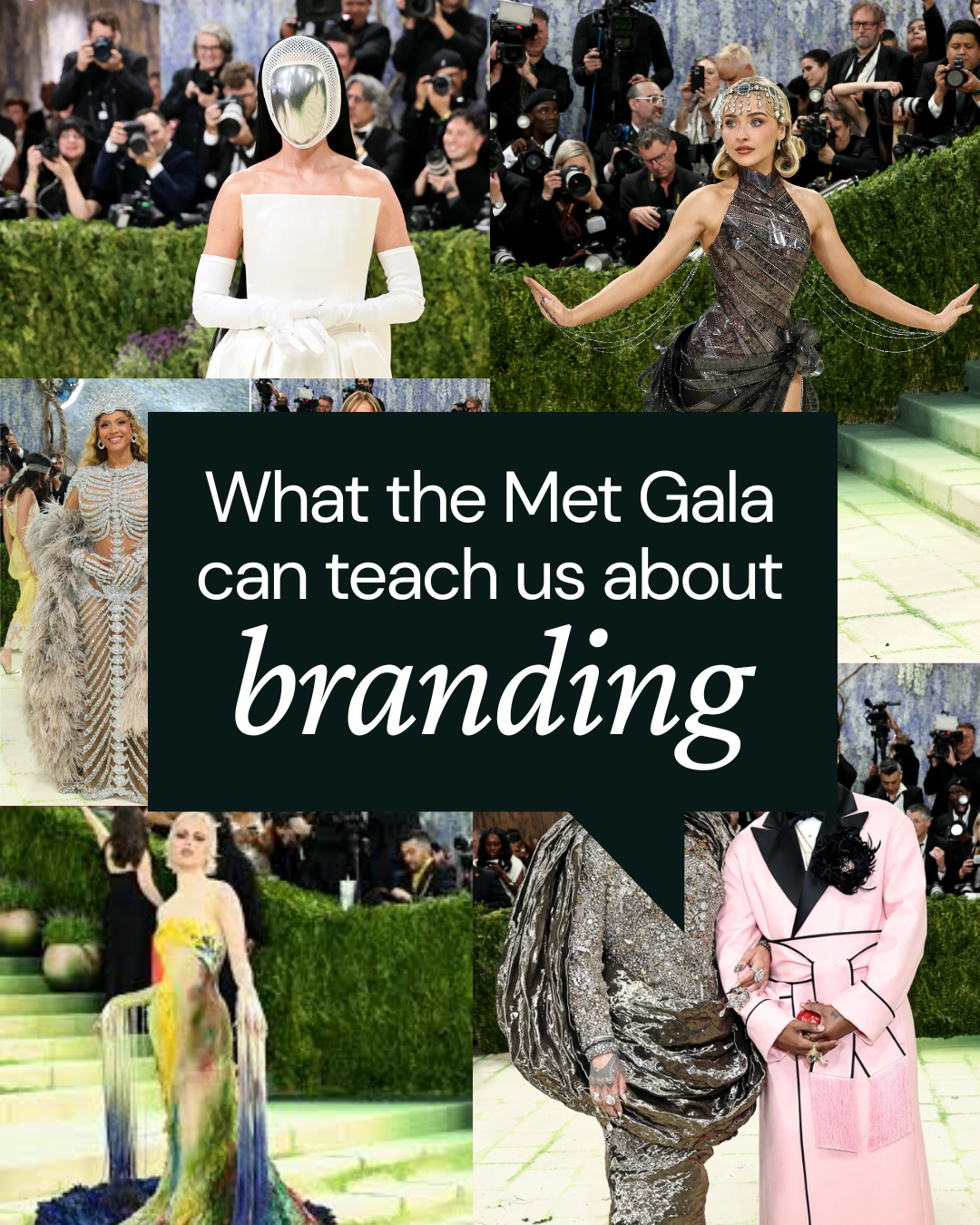
Everyone watches the Met Gala for the outfits.
But when you look at it through a marketing lens, it becomes something else entirely, a live case study in branding, interpretation and execution.
Every year, attendees are given the same brief. This year, it was “Fashion is Art”. On paper, it’s a simple concept, but what makes the Met Gala so interesting is how differently that brief is interpreted. Some take it literally, some push it creatively, and some miss it altogether.
And that’s exactly what makes it such a good parallel for marketing.
It’s Not About the Brief, It’s About the Interpretation
The outfits that stand out are never the safest ones. They’re the ones that fully commit to an idea and bring it to life in a way that feels intentional. You don’t remember the outfits that were simply “nice”. You remember the ones that made you pause, question it, or look twice.
That’s not accidental, it’s the result of someone taking the brief and pushing it further.
In marketing, the same principle applies. Two businesses can have the same objective, the same budget and even access to the same channels, yet the outcome can be completely different. The difference almost always comes down to how well the brief has been understood and how confidently it has been executed.
Where Most Brands Get It Wrong
Most businesses aren’t getting marketing completely wrong. In fact, many are doing all the right things on paper. They invest in brand design services, they brief in graphic design and branding, and they might work with a logo design agency to build something that looks polished and professional.
The issue is what happens next.
The output often becomes cautious. Social content is consistent but forgettable. Websites look clean but don’t convert. Campaigns are delivered, but they don’t really move anything forward.
There’s nothing technically wrong with any of it. It just doesn’t stand out.
Staying On Brand vs Playing It Safe
There’s a common misconception that strong branding means playing it safe, but the reality is the opposite.
The most effective brands don’t step outside of their identity, they understand it well enough to use it properly. They know where they can push creatively and where they need to hold back. They’re confident in how their brand shows up, which allows them to make bolder decisions without losing consistency.
This is where working with the right creative design agency or investing in high-quality graphic design services becomes important. It’s not just about producing assets, it’s about interpreting the brand in a way that feels clear, confident and commercially effective.
The Brands That Actually Grow
The brands that tend to grow aren’t necessarily the loudest or the most extreme. They’re the ones that have clarity.
They understand what they’re trying to achieve, they align their messaging and visuals accordingly, and then they commit to it. There’s a level of confidence in their execution that makes everything feel more deliberate.
That doesn’t mean taking risks for the sake of it. It means avoiding the middle ground where everything feels safe but nothing is memorable.
Why Safe Marketing Gets Ignored
Most marketing doesn’t fail because it’s bad. It fails because it gets lost.
People are exposed to so much content every day that anything overly safe or overly familiar is easy to scroll past. Being “good” is no longer enough to stand out.
To cut through, brands need to be clear in what they’re saying and confident in how they’re presenting it. That doesn’t mean being controversial for attention, it means making intentional decisions that make the brand more recognisable and more distinct.
What Can We Learn?
The Met Gala works because it forces interpretation. Everyone starts with the same theme, but the outcomes vary massively depending on how that theme is approached.
Marketing works in exactly the same way.
You can give multiple businesses the same tools, the same platforms and the same objectives, but the results will always depend on how well those elements are brought together. The difference is rarely effort, it’s usually clarity and execution.
Key Takeaways
- A strong brief means nothing without the right interpretation
- Staying on brand doesn’t mean playing it safe
- Most marketing isn’t ineffective, it’s just forgettable
- Clarity and confidence in execution matter more than doing more
- The brands that stand out are the ones that fully commit to the idea
- Good design isn’t enough, it needs to perform commercially
- Consistency is important, but distinctiveness is what drives attention
- You don’t need more marketing, you need better direction